
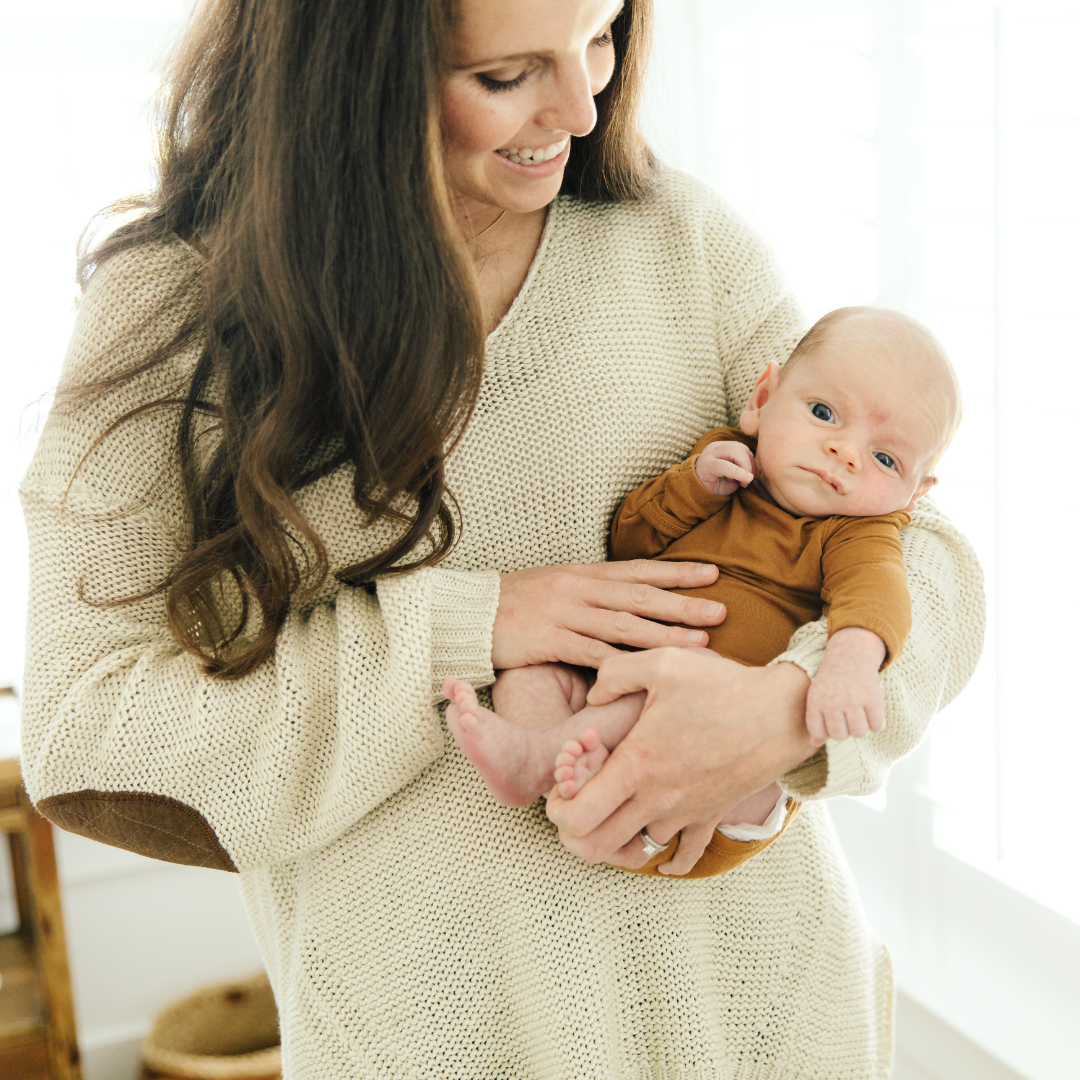
Babies Made Simple · Online course, birth to 12 months
A well-fed baby
sleeps longer.
The same step-by-step plan our nurse and IBCLC team uses in real homes and consult rooms every week, now online for every age, birth to 12 months.
By Hillary Sadler, RN, MSN, IBCLC · ★ 4.9 · 6,000+ families helped in person in Charleston, SC
The whole first year for $97. Most programs charge that for just the first few months.
30-Day Money-Back Guarantee
Try it risk-free. If it’s not helpful, email us within 30 days for a full refund. No hoops.
Tired of guessing?
- Up every 2 hours, night after night
- Catnaps that never seem to stick
- Feeds that drag on, or a baby who always seems hungry
- A different answer from every app, book and friend
Here’s what most sleep programs miss: sleep starts with feeding. When your baby feeds well, sleep falls into place.

Your plan is simple
Learn the method
Watch the short foundation lessons in one afternoon.
Follow your baby’s routine
Pick your baby’s age and follow the day-by-day plan.
Feel confident again
A simple routine you trust, from birth to 12 months.
One course. Everything included. $97.

I’ve been where you are.
Hi, I’m Hillary Sadler, RN, MSN, IBCLC, and a mom of four. With my first baby, I did everything “by the book” and still felt exhausted and lost. Once I connected feeding and sleep, everything changed.
Today my team and I help families in homes and consult rooms every week. Babies Made Simple is exactly what we teach them.
Peek inside the course
Short video lessons in 9 modules covering newborn sleep, feeding, naps and daily routines through 12 months. Watch at your own pace on any device, and come back as your baby grows.
The Baby Settler Method
The simple framework behind every routine.
Feeding Foundations
Full, efficient feeds for every feeding style.
Breastfeeding & Pumping
Latch, milk supply and pumping.
Wake Windows & Overstimulation
Read your baby’s cues and time sleep right.
Sleep Foundations
Safe sleep, gentle settling and naps that stick.
Your Routine by Age
Day-by-day routines from birth to 12 months.
The 4-Month Shift & Night Weaning
Get through the regression and drop night feeds gently.
Troubleshooting by Symptom
Reflux, gas, early wakings, short naps and more.
Printable Library
26 guides to print, save and share with caregivers.
Trusted by 6,000+ families we’ve helped in person in Charleston, SC since 2020, plus over 1,000 online students.






What fellow parents are saying…
Why Babies Made Simple is different
Everything you need for the first year
- Feeding for every family: breast, bottle, pumping or formula
- Sleep foundations, wake windows and naps
- Detailed daily routines for every stage, 0–12 months
- Gentle settling methods by age (no cry it out)
- The 4-month shift and night weaning
- Help for reflux, gas, early wakings, short naps, solids, twins and more
- 26 printable guides, lifetime access, on any device
Babies Made Simple
The complete course, every routine, and 26 printable guides.
$97 · lifetime access · 30-day money-back guarantee
One initial consult with our team is $250. The course gives you the whole first year for $97.
The perfect baby shower gift
Give a new parent the plan you wish you’d had. At checkout, choose Send as a gift and enter their email. We’ll send them their access.
Questions? We’ve got you.
What’s included in Babies Made Simple?
You get the complete Babies Made Simple course: 9 modules of video lessons, detailed daily routines for every stage from birth to 12 months, gentle settling methods by age, and 26 printable guides covering feeding, sleep, naps, pumping, returning to work, reflux, formula and more.
Is this only for breastfeeding moms?
Not at all. Feeding Foundations is for every family: breast, bottle, pumping, formula or combo feeding. There’s an optional breastfeeding and pumping track if you need it.
I’m pregnant. Is it too early?
It’s the perfect time. Moms who start before baby arrives tell us they wish they’d found it even sooner. Start with Module 1 and the newborn routines.
My baby is already 4+ months. Is it too late?
Not at all. There are routines through 12 months, a full module on the 4-month shift and night weaning, and troubleshooting for older babies, including early-morning wakings and starting solids.
Will this help if my baby is already waking multiple times a night?
Yes! You’ll learn how to identify what’s actually waking your baby—hunger, habit, or something else—and how to gently stretch those nighttime feeds so you can both rest.
What’s your take on letting babies cry it out?
I know there are strong opinions out there about the “cry it out” method, and I’d like to share my thoughts with you. First, I do not recommend letting babies under four months old cry it out. During the first few months, babies are still developing skills like rolling to their sides, bringing their hands to their mouths, or sucking on their fingers or thumbs, all of which are key ways babies comfort themselves.
When babies are unable to self-soothe (from being swaddled, lack of skill development, etc.) crying often leads to elevated stress, increasing cortisol levels rather than helping them learn how to calm down. During these early months, crying tends to indicate a need that hasn’t been met, whether that’s hunger, discomfort, or simply being overtired. By managing wake windows and making sure they’re well-fed and comfortable, most babies at this stage can sleep peacefully without resorting to “crying it out.”
Now, when a baby is over four months old, their developmental capacity changes. At this point, they can purposefully bring their hands to their mouth and rollover. They’ve also outgrown the startle reflex that often wakes them in the early months. If your baby continues to be soothed with external help—whether that’s a pacifier, co-sleeping, or something like the Snoo—it may mean they haven’t had the chance to learn self-soothing yet. This may be a good time to try letting them cry for a little.
Of course, this approach is not about ignoring your baby’s needs. You should always be sure that they’re fully fed, comfortable, and in a dry diaper before letting them cry, but if you’ve addressed everything possible to create an optimal sleep environment, crying could simply be their way of figuring out how to soothe themselves and transition through sleep cycles. There’s no evidence-based research to suggest that letting babies cry a little under these circumstances is harmful. In fact, providing this opportunity can help them develop an important skill that will serve them well, not just in infancy but throughout toddlerhood and beyond!
Can I take the course at my own pace?
Absolutely. Once you enroll, you’ll have instant, lifetime access to all lessons. Watch anytime, anywhere—even during a 2 a.m. feeding session.
What if I still need help after the course?
You can book a 1:1 consult with one of our nurses or IBCLCs for personalized support. Many families combine the course + consult for faster, more confident results.
You can sleep again, and so can your baby.
Picture it: full feeds, predictable naps, and a baby sleeping long stretches at night. You, rested and confident again.
You don’t have to keep guessing, or spend months up every two hours. Start today, risk-free.
Not ready yet? Start free.
Get our Goals by Age chart: what to expect for feeds, naps and night sleep at every stage, 0–12 months.
You’ll also get a few short tips by email. Unsubscribe anytime.