
Baby Settler Blog
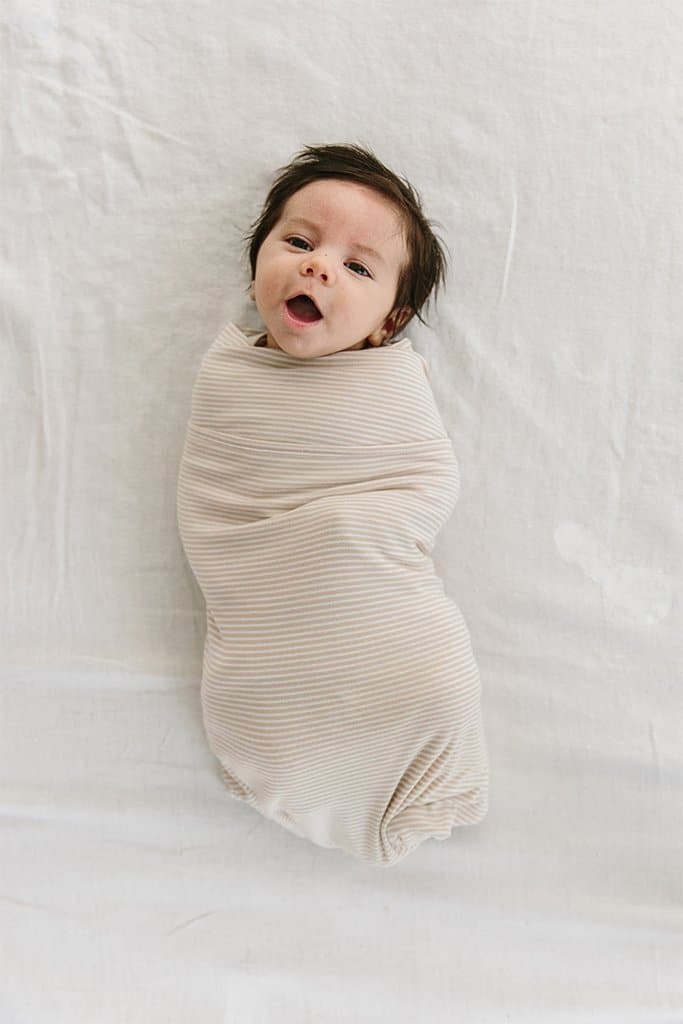
Why You Should Swaddle Baby
Swaddling. Is it really necessary?
I’ve often heard new parents say, “My baby hates to be swaddled.” While I don’t agree with their statement, I can see why it’s made. A lot of people think to be swaddled is for your baby to have their arms pinned down by their side as if they were in a strait jacket. I’ve even seen some well-known sleep consultants recommend this technique to parents. I completely disagree with this type of swaddling.
Many babies prefer to have their arms midline to their body. Babies also need to be able to move their legs up and down and side to side. Have you ever noticed your baby lift her legs up and them slam them down? It’s fascinating to watch! Many times, this has to do with gas. Babies need to be able to move their hips and legs when they are swaddled. Remember when you were a kid and your stomach hurt? What did you do? I remember I would lay on my side or my stomach with my kneels pulled up to my chest. I’d assume the fetal position! Now, imagine if you’re positioned in a way that your flat on your back with your arms pinned down by your side. Not a good thought!

The Right Swaddle
It’s really important to find the right swaddle for your baby! The right swaddle for your baby is going to change based on their age. And all the swaddle brands promise that their swaddle will help your baby “sleep through the night!” And I agree swaddling can, and will, help your baby sleep longer periods at night, but it’s not the only thing. But here, let’s talk specifically about swaddles. Having the right swaddle, or sleep sack, can definitely affect your baby’s ability to get good quality sleep!
I don’t like loose blankets to be used for swaddling for nighttime sleep. Anytime you’re holding your baby for a nap, a loose swaddle blanket would be appropriate! And there are so many cute ones out there! I also like to use swaddle blankets for burp cloths and cover ups.
Here’s something you might not know. When your baby’s arms float out in space and startle, your baby feels like he’s falling! Not fun, right?!? While it is really important to let your baby move freely at times, when your baby is sleeping, it’s important to help him feel secure so he can get good quality sleep.
So, what should I consider when choosing the right swaddle?
- Make sure your baby is able to have their arms midline to their body.
- The swaddle fabric should be stretchy but secure.
- I have found that a zipper on a swaddle is key for the 2 A.M feedings.
How long should you swaddle your baby?
A hard and fast rule to swaddling is you should no longer swaddle your baby once she’s rolling over. Usually, this will happen between weeks 10 to 14. Once your baby has started to roll to her side, she is probably pretty close to rolling over. It is not safe for your baby to sleep swaddled once she is rolling over. I’ve found that many babies prefer to sleep on their belly once they learn how to roll from their back to their belly. If your baby is able to roll from their back to their belly, it is safe for them to sleep on their belly. Let me clarify that statement. It is not safe to put your baby on her belly to sleep. However, if she can roll to her belly once she’s been placed on her back, it is safe for her to sleep on her belly.
Swaddling During the Naps
Let’s talk a minute to talk about swaddling during the daytime hours. I’ve had many parents ask the question, “Do I need to swaddle my baby for daytime sleep?” Yes! You do. The point of a swaddle is to help your baby get good quality pockets of sleep! Swaddling isn’t just for nighttime sleep. Anytime you’re putting your baby down for a nap in a crib or bassinet, you want to swaddle your baby.
How do you transition your baby out of the swaddle?
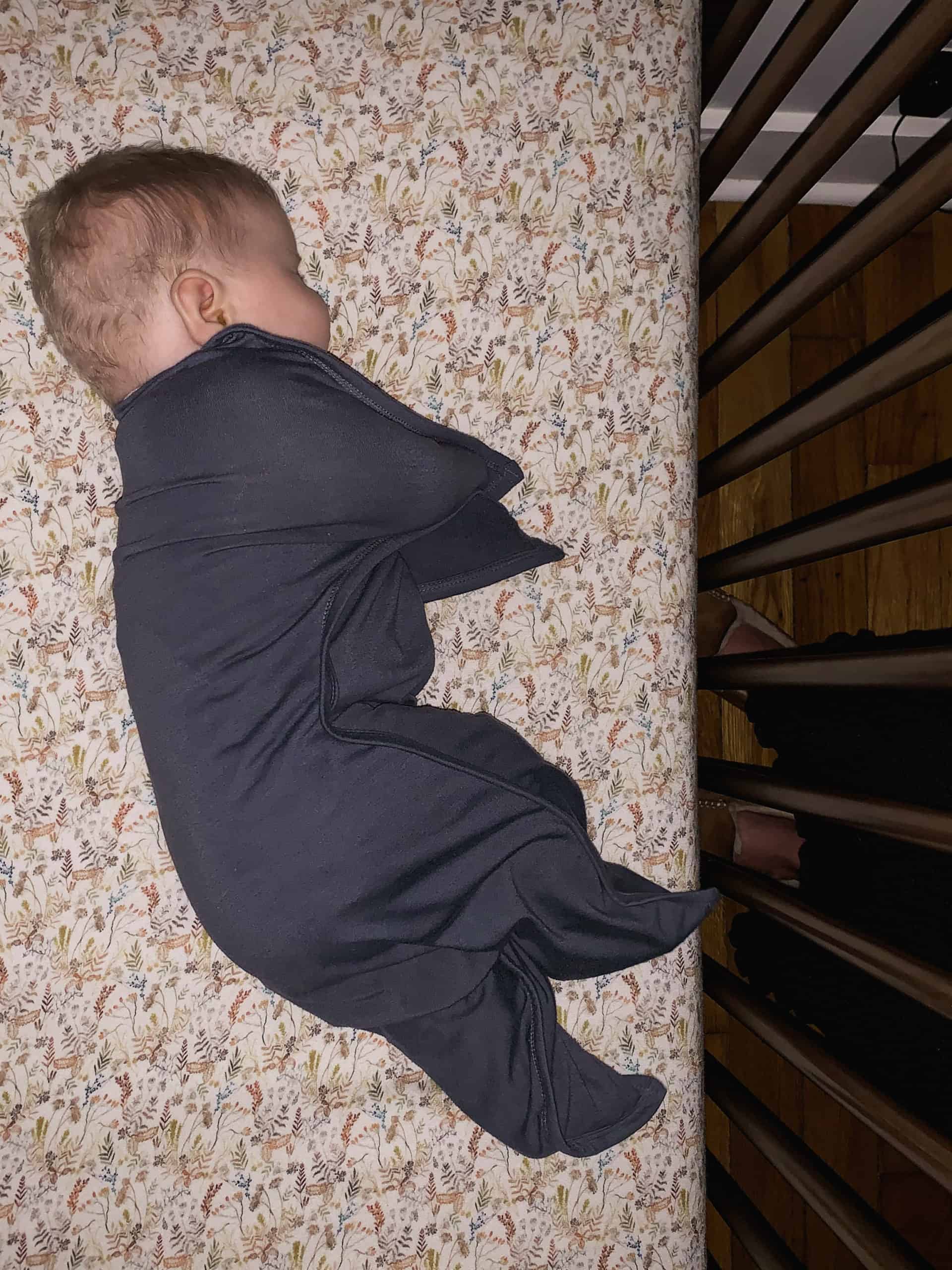
I can guarantee if you Google this question you will get many thoughts and suggestions on how to do this! You will also start seeing ads for magic sleep suits or other sleep sacks to help your baby transition out of the swaddle. The problem many babies have when going from a swaddle to freedom is the fact that they can no longer “feel their edges”. There really isn’t a magic trick to this transition. In fact, it really has to do with your babies developmental level. Around three months, the startle reflex will start to disappear. Once it’s gone, your baby will be developmentally ready to sleep without being swaddled. That being said, I will share that I found the Zipadee Zip very helpful with this transition. It helped my babies still be able to feel their edges while also giving them the freedom to move around and sleep on their belly if they wanted to (all three of my babies were belly sleepers as soon as they learned to roll).
My favorite swaddles for all the stages:
- The Convertible Woombie (birth through 6 weeks)
- The Love to Dream Swaddle UP (6 to 12 weeks)
- The Zipadee Zip (sleep sack) for when your baby is rolling over (seen above!)
And if you need additional help getting your baby to sleep through the night I break down the Feed, Wake, Sleep and Have a Settled Baby Method in the Babies Made Simple course.
You’ve got this!
Hillary

Ways to Get Your Partner Involved with Your Newborn Even if You’re Breastfeeding
From the moment you see those two pink lines, life as you know it changes forever. The journey into parenthood is exhilarating, yet it often feels like a roller coaster ride with no manual to guide you. For many new moms, especially those who are breastfeeding, it can...

The Default Parent (an opinion piece)
I want to start out by saying that I'm blessed to have an incredible partner in my husband. Honestly, there are many times when I sit back and compare myself to him and feel completely inadequate in my role as a wife and mother. He does it all- literally. He is an...

How to Choose the Best Pediatric Provider for your Family
How to choose the best pediatric provider for your family. Trying to choose the best pediatric provider for your family has always been a really important decision But honestly, I think it’s more important now than it ever has been. When I was having my first...